
Water distillers are quietly brilliant.
This humble device is a hidden gem for your personal health and savings. With nearly zero effort, it materially improves your life from day one and keeps on giving for years to come.
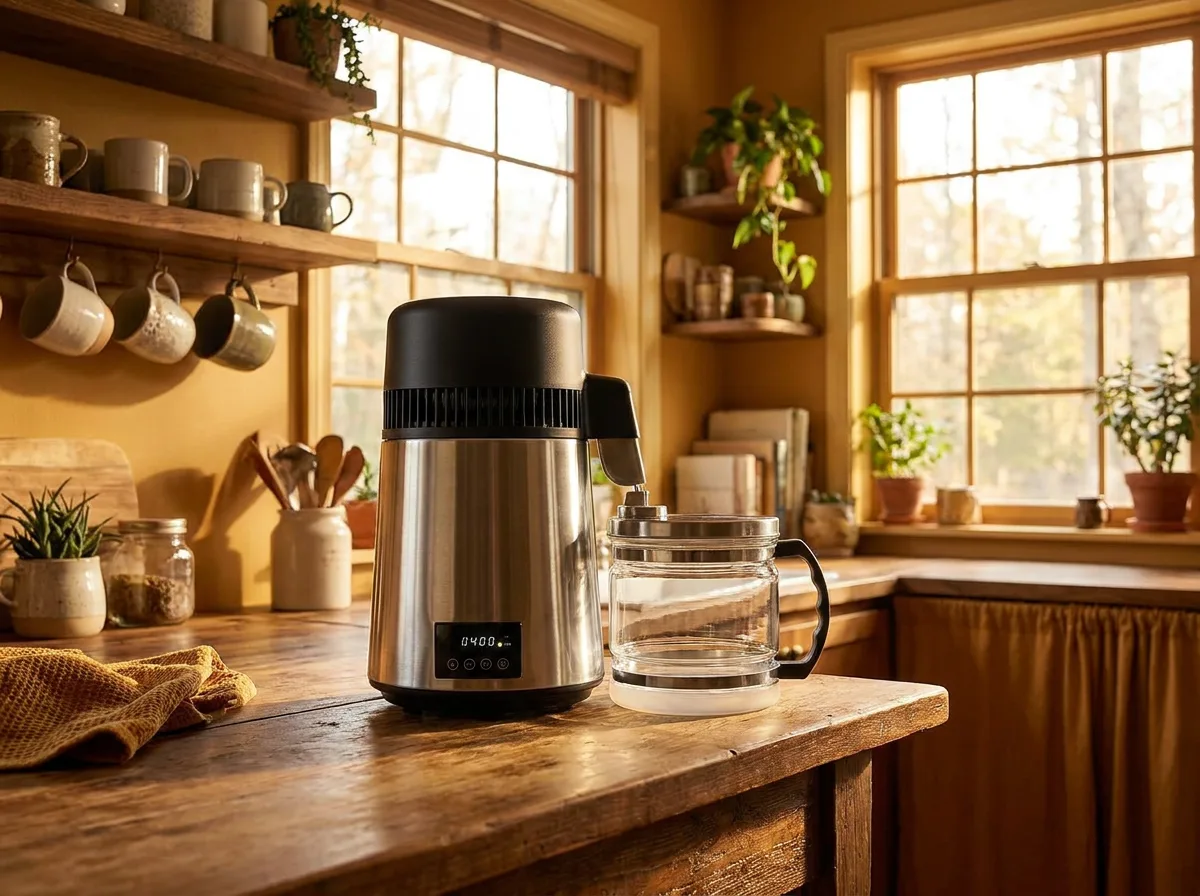
*CO-Z 1.1 4L water distiller
If you are like me, you are probably paying attention to water quality and prefer clean water without pollutants. Most people start with bottled water, buying it at retail or through delivery. Some even subscribe to a water delivery service. Some others use carbon filters or just boiling tap water. Naturally, the default choice for distilled water for many people is to regularly buy bottled water in bulk. And if you are like me, eventually you start noticing how many bottles are getting regularly thrown away.
730 bottles
2L bottle, 4.0 L/day, one year of water consumption
Each bottle comes at a cost to your wallet, to your time while buying and disposing it, and to the environment. And at a very simple level, it takes quite a bit of physical effort to pick up a pack of bottles every week and get it home. Is there a better way? Let's dive deeper!
Prices
Personal water distillation is surprisingly and exceptionally cost-effective. Compared to more traditional sources of distilled water, it leads to significant savings.
In a typical USA scenario of 4.0 L/day, a countertop distiller costs about US$170 over a year, including the US$80 distiller purchase price. Compared to over US$1,600 for store-bought 2L bottles, switching to a water distiller would save US$1,500 every year.
How can it be so much cheaper? The major cost factor in bottled water is not the water itself; it is the plastic container, delivery to the store and then to your home, markup fees, taxes, storage and retail-facility rent, hourly wages, and fuel costs. Meanwhile, most apartments and houses already have a government-supplied drinking water source at a very low rate and standard quality. Wouldn't it be easier if water itself were delivered straight to your house? Just turn the tap and you get it.
In addition, if you are living in a moderately cold climate, the excess heat during distillation is effectively dispersed and helps to heat your home. Moreover, freshly distilled water is already warm and will use less gas or electricity to reach boiling point. Together, this means the electricity used in distillation is doing useful work, making the overall efficiency approach the theoretical maximum.
Health
The practical case is simple: boil, evaporate, condense, collect. The result is water free from most pathogens and residues. Consumption of such clean water over time reduces the risk of complications and reduces stress on the liver and kidneys. In the long run, this leads to a smaller accumulation of residues in the brain, the endocrine system, and other organs. It reduces the risk of Alzheimer's, infertility, and other chronic illnesses. Importantly, because it relies on basic physics and needs no replaceable parts, it maintains high-quality filtering over the long run.
Microbes hate heat. WHO notes that microbiologically contaminated drinking water can transmit diarrhoeal disease, cholera, dysentery, typhoid, and polio. Boiling water effectively kills many of these microorganisms, which significantly reduces the risk of food poisoning. In fact, the majority of cooking recipes involve treating water and food at high temperatures for very same reason. Distilling water is a standard medical procedure in hospitals and laboratories to avoid contamination.
Lower total dissolved solids (TDS). While typical municipal tap water contains 150 to 400 ppm of TDS, a purification process like distillation can effectively reduce that baseline down to 0 ppm. The EPA explicitly lists distillation as highly effective for removing chloride, total dissolved solids, and other inorganic substances. This extraction capability is vital because high TDS can mask hazardous heavy metals like lead and mercury. Research hosted by the National Institutes of Health (NIH) reveals that these heavy metals act as severe neurotoxins that accumulate over time. Chronic exposure directly triggers damage to the brain, kidneys, and liver, while strongly correlating with the progression of neurodegenerative disorders like Alzheimer's disease.
Lower microplastic and nanoplastic exposure. In 2024, NIH highlighted research estimating roughly 240,000 plastic particles per liter in sampled bottled water, with roughly 90% identified as microscopic nanoplastics. The health effects are still being actively studied, but reducing contact with single-use plastic is a sensible risk-reduction move, particularly since studies show commercially bottled water frequently carries higher plastic particle concentrations than standard tap water. Environmental factors drastically accelerate this pollution; when plastic bottles are exposed to heat and solar UV radiation, the material degrades, releasing millions of additional submicron particles and leaching volatile organic chemicals into the water. Once ingested, these unfiltered pollutants accumulate in cells and tissues, operating as dangerous endocrine disruptors. In her landmark book Count Down, epidemiologist Dr. Shanna Swan outlines how these ubiquitous chemicals hijack human reproduction. Her underlying comprehensive meta-analyses reveal a staggering 50% to 60% drop in total sperm counts among Western nations over a 40-year window, continuing a downward trajectory of roughly 1% per year. This hormonal interference is exceptionally perilous during pregnancy; prenatal exposure to anti-androgenic plastic compounds disrupts vital fetal programming, inhibits proper baby development, and compromises long-term fertility, making it essential for expecting mothers to minimize plastic contact.
Lower chemical pollutants exposure. The EPA finalized a national drinking-water rule for six PFAS in 2024, serving as a reminder that emerging contaminants are serious enough to trigger strict nationwide limits and mandatory monitoring. Beyond accidental contamination, many nations intentionally introduce foreign additives into municipal systems. For example, the United States, Australia, and the United Kingdom systematically inject chemical additives like fluoride into public drinking water to aid dental health, though this widespread practice remains highly debated due to concerns over controlled dosing and systemic side effects. Distillation successfully removes dissolved mineral salts, acids, and fluoride by leaving them in the boiling chamber. Certain hazardous Volatile Organic Compounds (VOCs), such as synthetic pesticides, industrial solvents, and benzene, have lower or about the same boiling points as water. These chemicals vaporize alongside water steam and condense together with it. An activated carbon filter is an effective additional step to remove them.
Minerals mostly found in food. Because distilled water is entirely stripped of dissolved solids, it lacks the essential electrolytes naturally found in unpurified sources. WHO notes that while drinking water can contribute to human mineral nutrition, its overall health impact varies significantly depending on local water hardness. For example, tap water generally supplies less than 6% of the daily recommended intake for calcium and 5% for magnesium. Conversely, the vast majority of our micronutrient requirements are satisfied through whole foods and targeted supplements. From a metabolic standpoint, the elemental minerals found in tap water exist as free-floating, inorganic ions. NIH highlights that these specific ions are highly bioavailable and readily absorbed by the gastrointestinal tract. However, the sheer density of minerals in solid food completely eclipses water. A single serving of dairy, leafy greens, or nuts provides hundreds of milligrams of complexed, organic nutrients that are efficiently broken down during standard digestion, making a balanced diet the true foundation for mineral regulation.
In conclusion, we encourage everyone to get one. This applies from high-rise apartments in city centers to private houses in the countryside. The evidence from experts and data is overwhelming. Start today and you will only wish that somebody told you about this earlier.
References

- Buy Great Value Purified Drinking Water, 1 Gallon at Walmart.com
- Scan receipts, compare local prices, track spending, and find better deals with NDX AI Shopping Ass…
- Water delivery costs $30 to $60 per month for a plan that includes 3 to 5 five-gallon bottles or $5…
- Energy Information Administration - EIA - Official Energy Statistics from the U.S. Government
- Cost of Water
- The CO-Z grey 1.1-gallon water distiller is a stainless steel 4L water purifier with FDA-listed, fo…
- Compare the Best Prices and Offers on ASDA Still Natural Mineral Water (6 x 2l) in Asda. From £2.55…
- Monthly subscription and save 5% on your 18.9 ltr water cooler bottles.
- Changes to the maximum amount energy suppliers can charge people on default tariffs for each unit o…
- Learn more about your bill and your charges if you have a water meter in your property, including h…
- Tap water vs. bottled water – What is really better?
- What German households pay for electricity | Clean Energy Wire
- Tariffs - Berliner Wasserbetriebe
- Galão de Água de 20 Litros - Vendemos - Santa Marta Águas - Distribuidora de Água | Diadema
- A Disk Água Mineral Geraldão trabalha na entrega de pedidos de Galões e Garrafões de diversas marca…
- Brazil electricity prices, September 2025 | GlobalPetrolPrices.com
- ceicdata.com/en/brazil/economic-financial-and-administrative-indicators-tariffs/tariffs-average-wat…
- watsons-water.com/watsons-regular-dw
- HK Electric has been achieving a supply reliability of over 99.999% of a world-class standard maint…
- Water & Sewage Tariff
- 18.9l桶装水品牌/图片/价格 - 18.9l桶装水品牌精选大全,品质商家,实力商家,进口商家,微商微店一件代发,阿里巴巴为您找到857个有实力的18.9l桶装水品牌厂家,还包括价格,高清大图,成…
- China electricity prices, September 2025 | GlobalPetrolPrices.com
- 水电气等价费标准一目了然!2026年版上海市市民价格信息指南公布
- 水价标准_上海水务海洋
- アルピナウォーター・ウォーターサーバー関連の商品一覧。商品名、価格、配送料、容量、提供エリア等。ウォーターサーバーと宅配水ならアルピナウォーター。
- Japan electricity prices, September 2025 | GlobalPetrolPrices.com
- 東京都水道局の料金ガイド(手続き・料金)のページです。
- 스파클 생수 18.9L 통합검색 : 다나와 통합검색
- South Korea electricity prices, September 2025 | GlobalPetrolPrices.com
- Water Price Surges as Production Costs Rise The price of water in Korea saw its biggest increase in…
- WHO fact sheet on water: key facts, access to water, water and health
- Quench Water Experts explain what TDS means and how we test for it to ensure your drinking water is…
- Secondary Drinking Water Standards: Guidance for Nuisance Chemicals | US EPA
- Neurotoxic Effects and Biomarkers of Lead Exposure: A Review - PMC
- sciencedirect.com/science/article/abs/pii/S0166432824003681
- Researchers developed an imaging technique that detected thousands of tiny bits of plastic in commo…
- Rapid single-particle chemical imaging of nanoplastics by SRS microscopy - PubMed
- sciencedirect.com/science/article/abs/pii/S0048969723001687
- sciencedirect.com/science/article/abs/pii/S0048969721067619
- Count Down - Dr. Shanna Swan — Dr. Shanna Swan
- Shanna H Swan talks to Gary Humphreys about the impact on human health of exposures to endocrine-di…
- Per- and Polyfluoroalkyl Substances (PFAS) and drinking water
- Homepage for the community water fluoridation site.
- Fluoride Exposure: Neurodevelopment and Cognition
- Many people try to avoid drinking water with high levels of fluoride, and if you are one of them, y…
- Curious if you can drink distilled water? While it is safe to consume, distilled water has several…
- What Are VOCs and How Do You Remove Them from Water?
- Calcium and magnesium in drinking-water Public health significance
- ars.usda.gov/arsuserfiles/80400525/articles/ndbc32_watermin.pdf
- The initial undertaking of the first Safe Drinking Water Committee (SDWC) was the identification of…